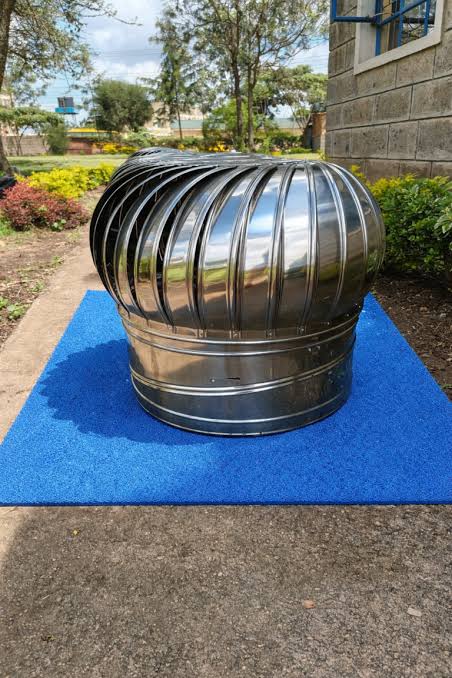
Roof Cyclones in Kenya, Tanzania, Uganda and Ethiopia
Technical Specifications
| Specification | Details |
|---|---|
| Product Name | Roof Cyclones |
| Product Type | Roof-mounted ventilation equipment |
| Primary Function | Natural air extraction and ventilation |
| Operating Principle | Wind-driven and natural air movement, depending on design |
| Installation Location | Roof structures |
| Construction Material | Varies by product design |
| Available Sizes | Varies according to ventilation requirements |
| Power Requirement | Wind-driven models generally require no electrical power |
| Typical Applications | Factories, warehouses, workshops and commercial buildings |
| Installation Method | Depends on roof profile and mounting arrangement |
Specific dimensions, airflow capacity, construction material and mounting details vary by product. Select the unit according to the building’s ventilation requirements and roof configuration.
Prices are confirmed on request. Send us the size and quantity you need.
Description
Roof Cyclones in Kenya, Tanzania, Uganda and Ethiopia
Product Description
Roof Cyclones are roof-mounted ventilation components designed to assist air extraction and improve airflow in buildings. Depending on their design, they use natural wind movement and temperature-driven air movement to help remove warm, stale or humid air from interior spaces.
Metraflex Industrial Suppliers supplies industrial and building ventilation products to customers across Kenya, Tanzania, Uganda and Ethiopia. Roof cyclones are suitable for selected industrial, commercial, agricultural and warehouse buildings where effective ventilation is required.
By supporting the movement of indoor air to the outside, roof cyclones can help reduce heat accumulation, improve air circulation and assist in removing airborne moisture. They are commonly considered for buildings with limited natural ventilation, including factories, workshops, storage facilities and production areas.
Roof cyclones are available in different sizes and configurations to suit various roof structures and ventilation requirements. Selecting the right unit involves considering building size, roof design, airflow requirements, environmental conditions and installation arrangements.
Key Features of Roof Cyclones
- Natural ventilation: Uses wind movement and natural air currents to assist air extraction.
- Roof-mounted design: Installed on suitable roof structures to provide an outlet for rising indoor air.
- Heat extraction: Helps release accumulated warm air from enclosed spaces.
- Moisture removal: Supports ventilation in areas where humidity and condensation are concerns.
- Industrial applications: Suitable for selected factories, warehouses, workshops and commercial buildings.
- Multiple sizes: Available in different dimensions to suit various building requirements.
- Energy-saving potential: Wind-driven models can operate without a dedicated electric motor.
- Building ventilation support: Helps improve air circulation when correctly selected and positioned.
Benefits of Roof Cyclones
Improves Air Circulation
Roof cyclones help move indoor air outside, supporting better circulation in buildings with suitable ventilation arrangements.
Helps Remove Excess Heat
Warm air can accumulate near the roof of industrial buildings. Roof cyclones help release this air, potentially improving indoor comfort.
Supports Moisture Control
In suitable applications, improved air exchange helps remove humid air and reduce conditions that contribute to condensation.
Can Reduce Mechanical Ventilation Demand
Wind-driven roof cyclones operate without a dedicated electric motor. Consequently, they may help reduce reliance on powered extraction systems when environmental conditions and building requirements permit.
Suitable for Large Buildings
Roof cyclones can be installed on appropriately designed factories, warehouses, workshops and agricultural structures.
Supports Workplace Comfort
By assisting heat and stale-air removal, roof ventilation can contribute to a more comfortable working environment.
Applications of Roof Cyclones
Roof cyclones are used in various building types where additional ventilation is required.
- Factories: Helps remove accumulated heat and stale air from production spaces.
- Warehouses: Supports air exchange in storage buildings.
- Workshops: Helps improve ventilation in suitable work areas.
- Agricultural buildings: Supports air movement in barns and selected farm structures.
- Commercial buildings: Used in suitable large spaces that require roof ventilation.
- Industrial facilities: Helps remove warm air from enclosed operational areas.
- Storage facilities: Supports ventilation where heat or humidity accumulation is a concern.
How to Choose the Right Roof Cyclone
Selecting the right roof cyclone is important for achieving suitable ventilation performance.
- Building size: Consider the floor area, ceiling height and total building volume.
- Ventilation requirements: Identify the amount of air exchange needed for the space.
- Roof type: Check compatibility with the roof profile and construction material.
- Cyclone size: Select a suitable unit based on ventilation demand and product performance.
- Environmental conditions: Consider typical wind conditions, rainfall and exposure to corrosion.
- Indoor heat sources: Account for machinery, production processes and other sources of heat.
- Installation location: Position units appropriately to support effective air extraction.
- Air inlet provision: Ensure replacement air can enter the building to support continuous airflow.
Installation, Handling and Maintenance Notes
- Install the roof cyclone using a mounting arrangement suitable for the roof structure.
- Ensure the roof opening is properly sealed against water ingress.
- Follow the installation instructions for the selected unit.
- Provide adequate replacement-air inlets to support ventilation.
- Inspect mounting points and roof seals periodically.
- Remove accumulated debris where necessary.
- Check for corrosion, loose fittings or damage during routine maintenance.
- Use qualified personnel for roof work and follow appropriate fall-protection procedures.
Why Buy Roof Cyclones from Metraflex Industrial Suppliers?
Metraflex Industrial Suppliers supports contractors, facility managers, industrial operators and commercial customers sourcing ventilation products and industrial supplies.
We serve customers across Kenya, Tanzania, Uganda and Ethiopia, supporting ventilation requirements for industrial buildings, warehouses, workshops and other suitable facilities.
Contact our team with your building type, roof configuration and ventilation requirements to discuss appropriate roof cyclone options.
Frequently Asked Questions
What is a roof cyclone?
A roof cyclone is a roof-mounted ventilation component that helps extract indoor air and release accumulated heat from suitable buildings.
Do roof cyclones require electricity?
Wind-driven roof cyclones generally do not require electricity because they use natural wind movement. Other roof ventilation systems may use powered equipment.
Where are roof cyclones commonly installed?
They are commonly installed on suitable factories, warehouses, workshops, agricultural buildings and commercial facilities.
Can roof cyclones help reduce indoor heat?
Yes. By assisting the removal of warm air, what can help reduce heat accumulation when the building has adequate replacement-air openings and suitable ventilation design.
Are roof cyclones suitable for warehouses?
Yes. They can support ventilation in warehouses, particularly where warm air accumulates near the roof. The required number and size depend on the building and its ventilation needs.
Where can I buy in Kenya?
Contact Metraflex Industrial Suppliers in Nairobi, Kenya, to enquire about roof cyclones for industrial and commercial ventilation applications.
Contact Metraflex Industrial Suppliers
Location: Dar es Salaam Road, Off Enterprise Road, Industrial Area, Nairobi, Kenya
Phone / WhatsApp: +254 117 254578
Email: metraflexindustrial@gmail.com
Supply Regions: Kenya, Tanzania, Uganda and Ethiopia
Reviews
There are no reviews yet.